


Yixing Teapot

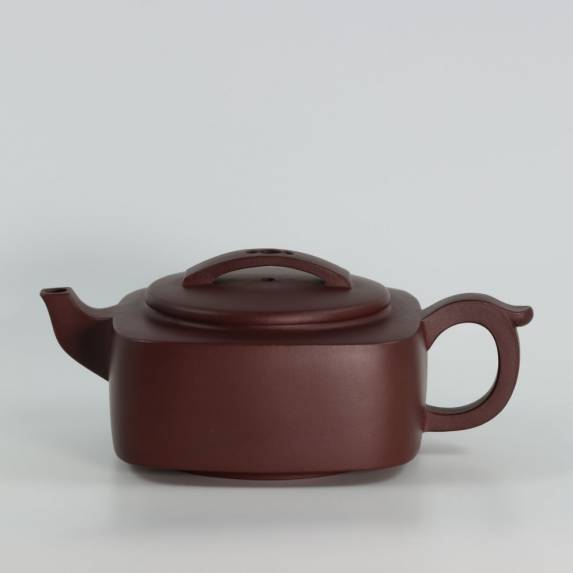
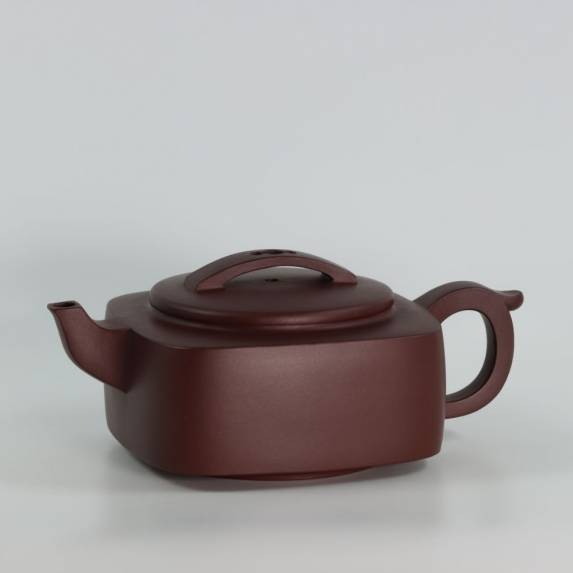
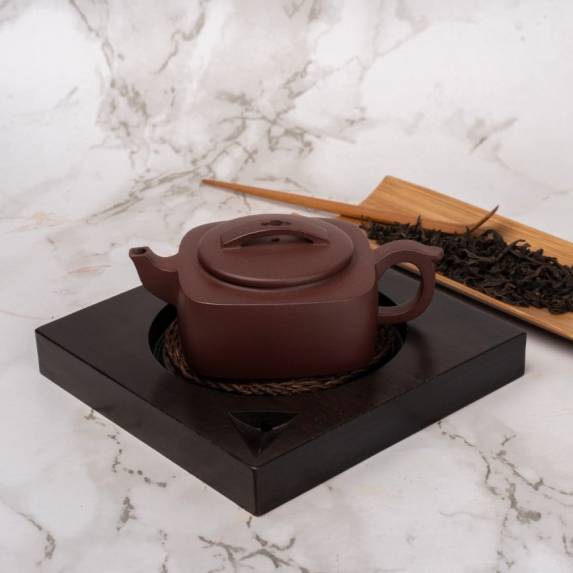
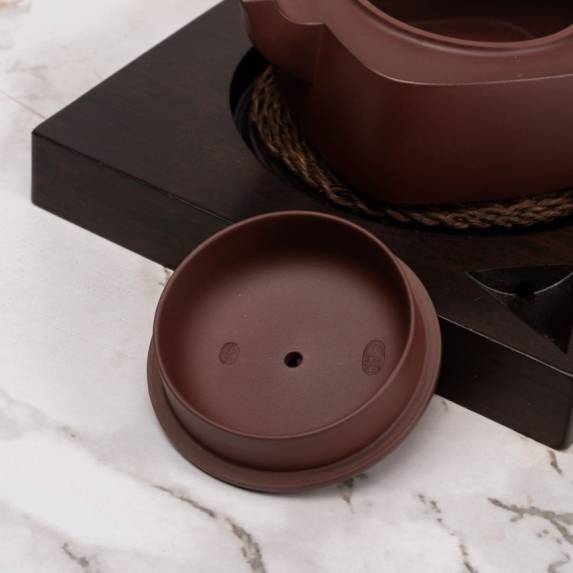
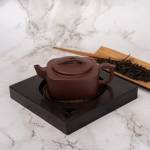
Sifang Han Wa Teapot (四方汉瓦壶)
- Product Code: Sifang Han Wa Teapot (四方汉瓦壶)
- Availability: In Stock
- $790.00
Author: Li Wen Jun (李文君)
Clay: Zi Ni (紫泥)
Origin: Yixing City, Jiangsu Province
Capacity: 180ml
Dimension: 12.9cm(L)*5.5cm(H),5.8cm (Holes)
Certification: Available
Packaging: Gift Box
Clay Material
Zi Ni is also called purple clay, it is a kind of clay that most famous pot masters like to use since Shi Da bin, a famous pot maker in the Wanli period of the Ming Dynasty. Purple clay is the most important of the three major clay types of Yixing Zisha clay. It is also the earliest and the oldest type of clay among the Yixing Zisha clays. More than 80% of Yixing Zisha clay is purple clay. Therefore, it is called “Zisha soil” and has a close relationship with purple mud. Purple mud is a relatively large-scale name, which includes a variety of different sand materials such as purple turbid cement, bottom groove green, etc., depending on the iron content of the original ore, for different colours.
Zi Ni Zisha clay has a high content of iron, a large and loose structure which forms a double porosity structure that allows excellent air and porosity convection. Due to these natural characteristic Zi Ni could greatly improve the tea quality and will respond well in terms of appearance changes with regular use.
Features
Zi Ni has porous structure could greatly improve the flavour of tea.
Recommendation
Suitable for brewing Oolong tea, various series of Pu erh Tea, and Black Tea
Biography of Li Wenjun (Certificate)
Li Wenjun, who was born in a family of ceramic art in 1972, was a National Art and Craft Artist, and a member of the Chinese Arts and Crafts Association. Entered the field of purple sand in 1993 and co-founded “Jinsha Tang Zisha Art” in 2007 with her husband, Shao Jian Ming. He has been in the art for more than 20 years. Master Shao works are beautiful in appearance, exquisite in workmanship. Deeply loved and praised by pottery lovers and collectors. His works have won many prizes at domestic and international Pot Art Exhibitions and were also in many publications.
中国工艺美术学会会员。
青年陶艺家,
工艺美术师
Zisha Teapot
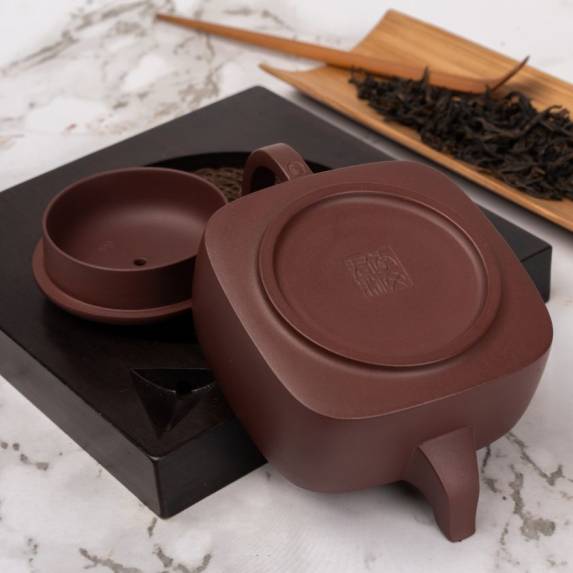
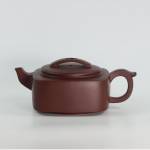
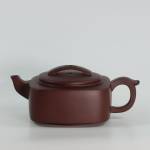
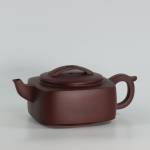
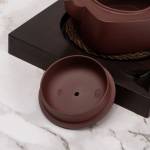
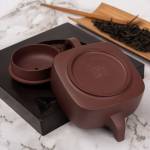
This fully handmade Yixing teapot that does not use a moulding tool to shape the body, everything is shaped by hand is called Sifang Junyu by Li Wenjun. The teapot body is a square cylinder with rounded corners, the mouth is round, and the neck is short. The meanders ear handles, bridge knobs, and circle bases are round in the square, which is cleverly crafted giving the ancient appearance. And the round cover with square bridge button is chic and exquisite, with a great antique sense.
*Refer to Yixing Zisha Teapot Seasoning & Preparation Before Use
* General Remarks
Colour tone in actual product may differ slightly due to lighting conditions during photo shooting.
Notify me once this product is available.
Purple Sand pottery refers only to Yixing Zisha and is produced locally in Yixing. There are three main types: Zisha purple mud (紫砂泥), red mud (朱砂泥), and green mud (本山绿泥). Yixing Zisha clay is a hydromica-quartz-kaolinite clay which contains a rich content of iron minerals. The range of Zisha clays is varied along with the popularity, quality, and the availability of each type. There is a different range of naturally occurring coloured clays available. The firing temperature is generally around 1150 degrees. The firing temperature of red clay is relatively low, and it is usually used to make small pots. When choosing a Yixing Zisha teapot, we need to consider the volume of the teapot for a certain type of tea. Thus, the shape will have much influence of the tea flavour and taste.
The characteristic of Yixing teapots is their ability to absorb trace amounts of brewed tea flavours and minerals into the teapot with each brewing. These accumulate to give each Yixing teapot its own distinctive interior coating that flavours and colours future brewing. It is for this reason many tea connoisseurs will steep only one type of tea in a particular Yixing teapot, so that future brewing of the same type of tea will be enhanced.
A newly fired purple sand pot cannot be used directly to make tea, it will have a smell of soil. The purpose of “opening the pot” (开壶) is to remove the purple sand particles, therefore Yixing teapots require seasoning prior to their first use. A Gong Fu Cha master will only use one type of tea in one pot, as the build-up of the tea oils will enhance the same tea. The method of seasoning the teapot is diverse, the following is a simple way to prepare it for use.
1) Prepare a pot of water enough to cover the new teapot and bring it to boil in low to medium heat for about 10 to 15 minutes, without covering the teapot lid.
2) Turn off the heat, let it cool then remove teapot and clean the inner wall with tea towel under clean water, rinse and wash the interior a few times and let it dry.
3) Consider the teapot itself has a good breathability and easily absorb the aroma of tea; you can also season it so that it acquires the flavour of your favourite tea more quickly. Put 1/3 capacity of tea leaves in the teapot and pour in boiling water, cover it, and let it sit for about 12 hours.
4) After this, empty the tea soup and tea leaves and carefully rinse the inside and outside of the teapot with clean water. Then wipe clean the teapot with a tea towel, leave the lid open till teapot is completely dry. The teapot is ready for use with your favourite tea.